Get more from your solar panels. Store what you generate and use it when it matters.
Most households export the solar energy they don’t use back to the grid for next to nothing, then buy it back at full price after dark. A battery stops that. It stores what your panels generate during the day so you’re running on your own electricity when the sun goes down, drawing far less from the grid when rates are highest.
UPS Solar installs solar panels with battery storage as a combined system, designed and sized for your property. We’re MCS accredited, Which? Trusted Traders, and a Fox ESS Elite Installer. Every installation comes with a 25-year panel warranty and 10-year inverter warranty, carried out by our own in-house fitting teams, not subcontractors.
If you already have solar panels and want to add battery storage, we can do that too.
Get a quote and we’ll tell you exactly what system size makes sense for your property and what you can realistically expect to save.
Welcome to UPS Solar, we install solar panels and battery storage solutions nationwide, with teams situated around the country.








Can I add battery storage to my existing solar panels?
Yes, in most cases. If your current inverter is a hybrid inverter it will already have a battery connection point and adding storage is straightforward. If you have a standard string inverter the options are either to replace it with a hybrid or to add an AC-coupled battery, which connects to the grid side rather than the panels directly. Both work. The right choice depends on your inverter make, age and the size of your existing array. We survey every property before recommending a system.
What size battery do I need?
For a typical three to four bedroom house the most common choices are between 9.5kWh and 15kWh. A 9.5kWh battery covers most of an average household's evening and overnight usage. A 15kWh system gives more headroom if you have an EV or higher than average consumption. The honest answer is that the right size depends on how much your panels generate, how much you use and when you use it. We size every system based on your actual consumption data, not a rule of thumb.
How much can I save with battery storage?
It depends on your tariff and how you use it. On a standard tariff a battery typically saves between £400 and £700 per year by using stored solar rather than buying from the grid in the evening. On a time of use tariff like Octopus Agile or Intelligent, where overnight rates can drop to 7p per kWh against a peak rate of 25p or more, the savings are significantly higher because you can charge the battery cheaply overnight even when the sun is not shining. Payback periods are typically between six and ten years depending on the system size and tariff.
Do I need solar panels to benefit from a battery?
No. A battery without solar still makes financial sense on a time of use tariff. You charge it overnight when electricity is cheap and discharge it during peak hours when rates are highest. The savings are lower than a solar and battery combination but the upfront cost is also lower. It is worth running the numbers on your current tariff before ruling it out.
What is the difference between AC and DC coupled battery storage?
DC-coupled storage connects directly to your solar panels through the inverter, which means energy only goes through one conversion process before it is stored. AC-coupled storage connects to the household circuit and converts energy twice, once from the panels and once into the battery. DC coupling is slightly more efficient but requires a compatible hybrid inverter. AC coupling is more flexible and can be retrofitted to almost any existing system. In practice the efficiency difference is small and the right choice is usually determined by what inverter you already have.

Posted on Google
 Ez Chowdhury
Trustindex verifies that the original source of the review is Google.
The whole process was incredibly smooth - from registration and quotation to installation and follow-up. Their pricing is very competitive, and they take care of everything, including DNO submission, MCS certification, and paperwork for SEG. Installation was carried out with care and professionalism. The workmanship is excellent, and the long warranties give real peace of mind. If you're considering solar, I’d highly recommend UPS Solar for a hassle-free experience.Posted on Google Andrea MarshallWhat a fantastic service and company, can't rate UPS Solar highly enough. We were contacted by our local council regarding a group solar power installation procurement, the council would do the hard yards finding the best company and, if we wanted to proceed, would put us in contact with them. Almost 1 month to the day we were told UPS Solar were the company we now have a shiny solar panels and battery installed. The communication has been top drawer from the survey to the proposal and the install, UPS Solar took the time to go through any questions or concerns. The scaffolding was erected and the install team arrived a few days later. They started around 0800 and by lunchtime everything was sorted, power flowing and rubbish taken away. UPS Solar then sent through instructions for connecting up to the app to see how everything is working and then a few days later all the certs were emailed across. The day after install the scaffold company arrived and removed the scaffolding. Super efficient. As you are probably aware by now, I can't rate UPS Solar highly enough, great company and seriously know what they are doing. You won't go far wrong.Posted on Google
 David YatesGood overall experience. System was installed professionally and cleanly. The only slight niggle was a lack of notice for the scaffolders turning up which didn't help with planning, but that's a minor gripe.Posted on Google
 Chris MadgeUPS fitted a replacement Solar inverter for me. Great response to get a good and competitive replacement and a speedy install. They even set up my phone to monitor the system. Excellent service.Posted on Google
 Molnár ZsoltHighly recommend them.I asked few quotes from companies then compared them and their offer was the better with 17 panels and 15kw battery.They were very helpful from the beggining till the end.They were on time with scaffold and instalation too.Made professional job no mess,cleaned up after they finished.Explained everything if I had any question during instalation.The system works better like we expected.Posted on Google
 sunnyi had a great experience Price was great alot of other company tried to overcharge for same system Service over the phone is great they answer all your questions The dno process was really fast The installers did a really good and tidy job covered and hide the cables everything looks nice and presentable Great after sales all documents come through fast and they monitor your sistem for any issues after install They have all the certificate for you to sell your energy after having a install from them and they provide with a good warranty So no complainsPosted on Google
 Sarang ChitaleUPS SLOAR INSTALLATION TEAM WAS VERY PROFESSIONAL AND HAVE DONE A FANTASTIC JOB! Everything was explained at each step. Phil and Martin are very knowledgable.Posted on Google
 Nick StonesA very professional and efficient team. We were contacted by Alan who provided an initial quote, and was very informative and patient with my many questions. After some research we found the pricing very competitive, but we found them far more helpful and responsive than others we had contacted. The whole team we have dealt with we helpful and efficient. The whole job was completed from initial contact to finish in a little over a month and that was with some delays on our part. I cannot recommend them enough. Super service. Thank you all at UPS.Posted on Google
 Mike CooperExcellent Company to deal with!! No pushy Sales people harassing with last minute deals or discounts The original survey and quote was done via Satellite imagery. When we expressed an interest a surveyor called to check the positioning of the panels of equipment. Ha also suggested we install a Water heater boost which diverts spare Solar power to the immersion heater. With the bright weather not only has the Solar met all our needs but additionally we have sold some back to the grid. The installation team were friendly efficient and very competent.fitted 3 batteries and 12 panels in the day. Scaffolding was removed immediatelyPosted on Google
 Bentley JohnUPS Solar have dealt with us in a most professional manner. From the initial contact in obtaining a proposal and the presentation of it , including price, to the arrangements made after accepting the order. The installation of the scaffolding and panels on the roof, battery with inverter and wired connections. were carried out on the days arranged. All the work was neat and correct with debris cleared at the end. Paperwork has been forwarded within days. All people involved have been efficient and most friendly and helpful. I would have no hesitation in recommending this company for works in future.
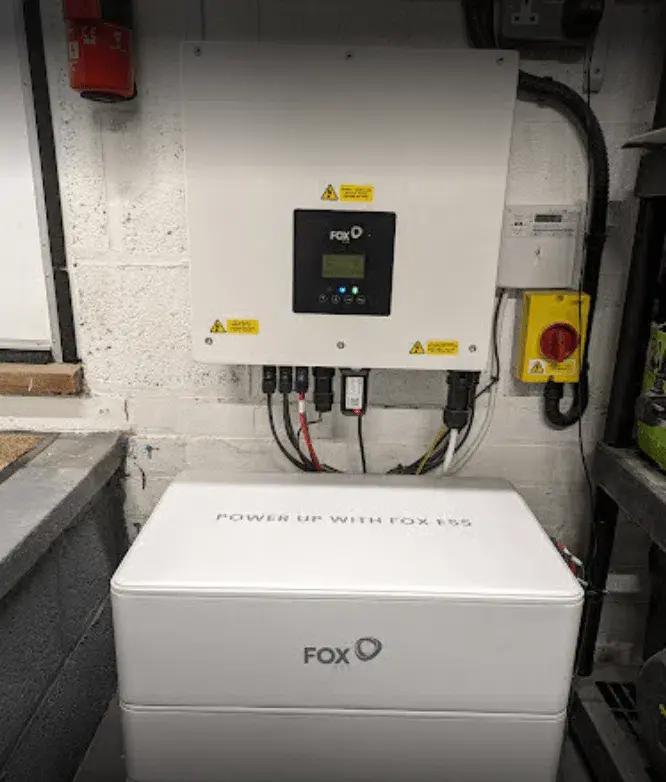
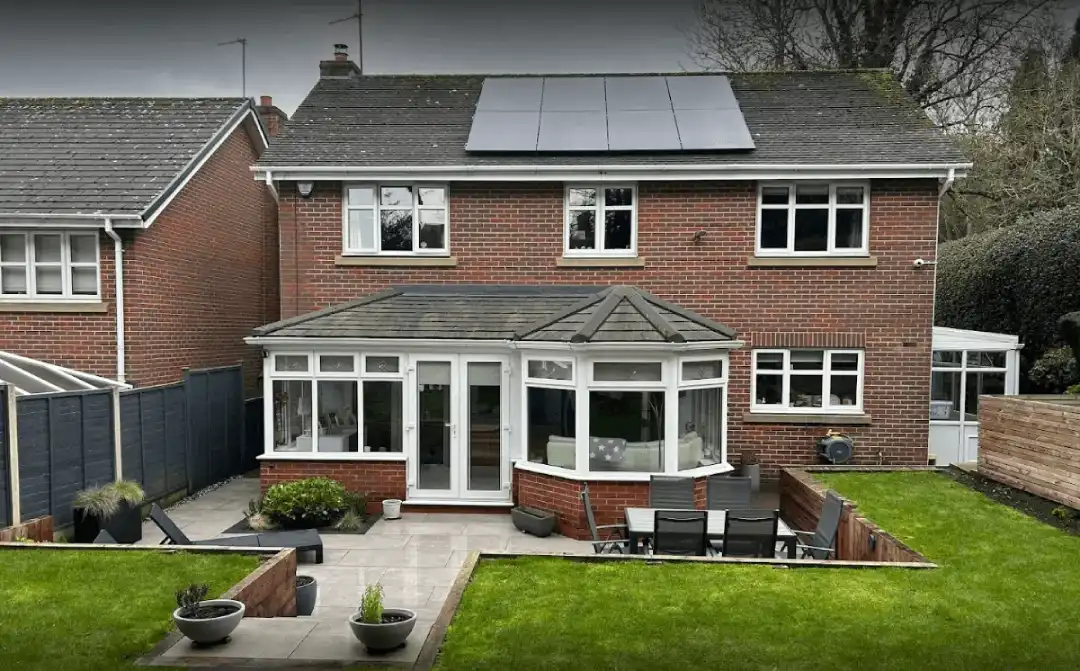
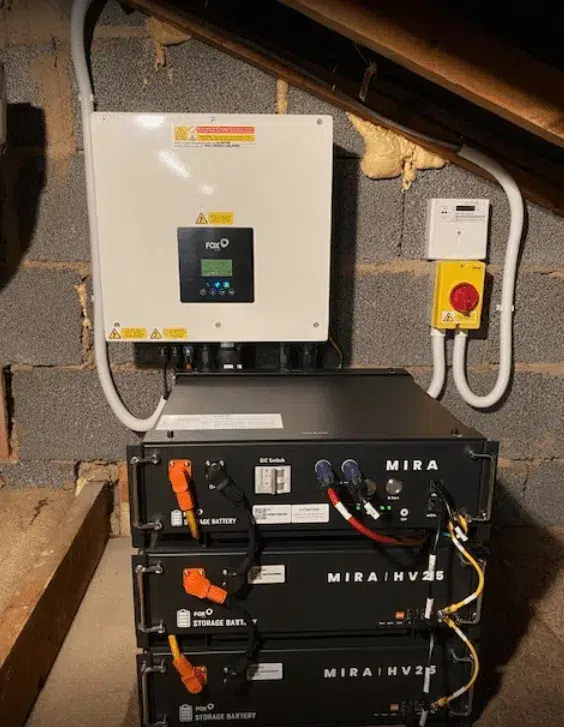
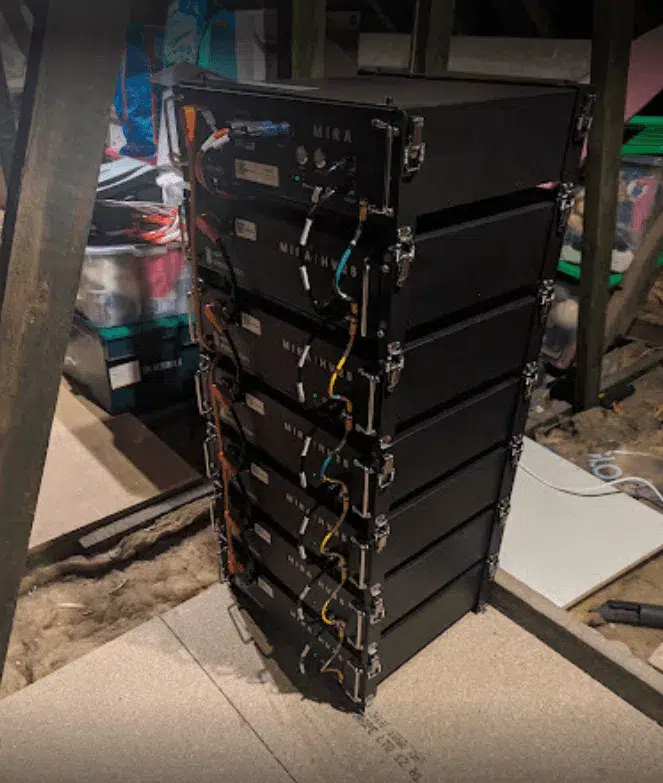
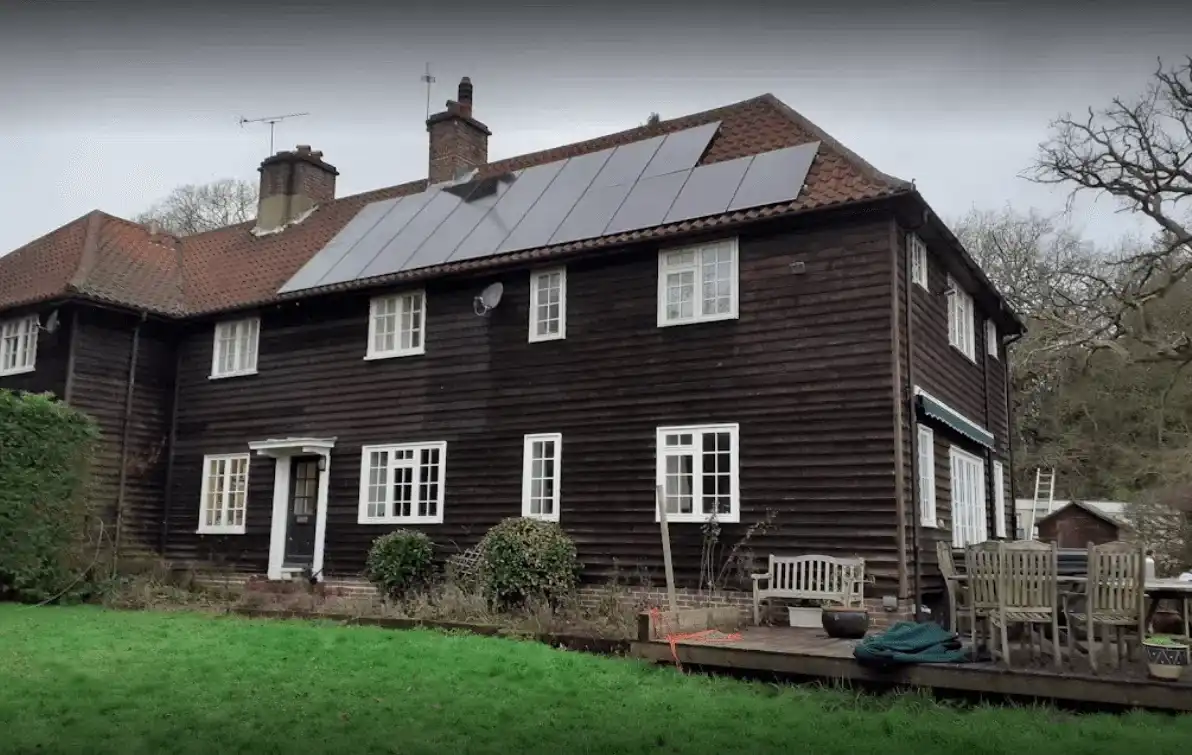
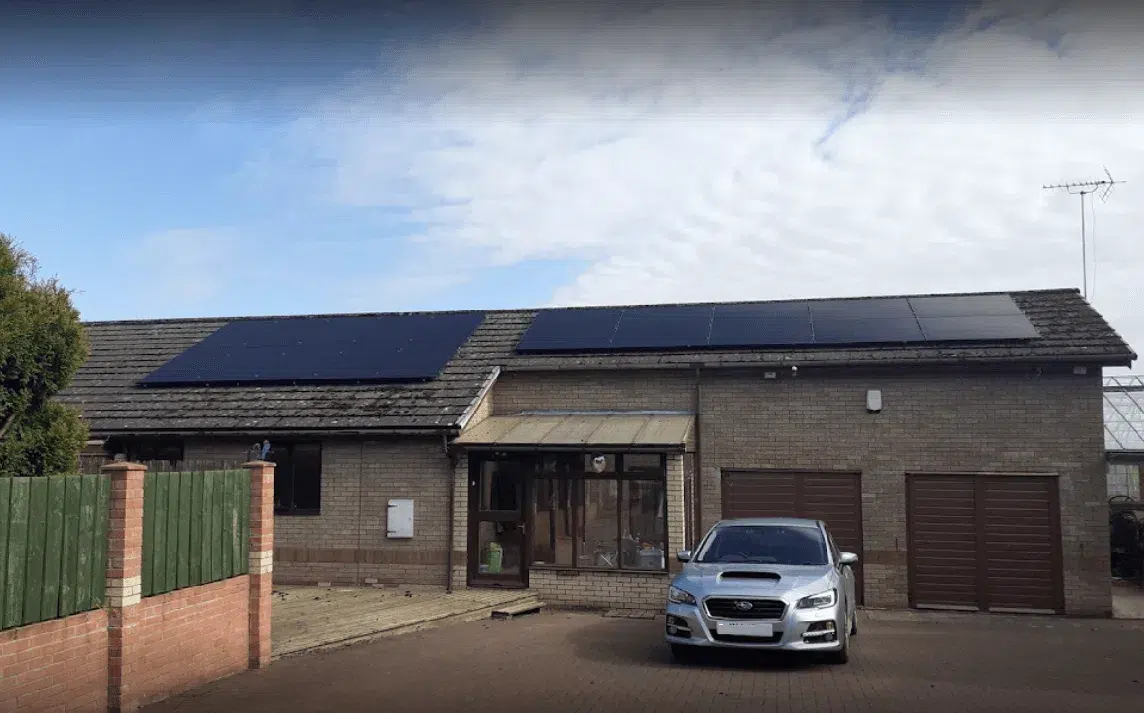
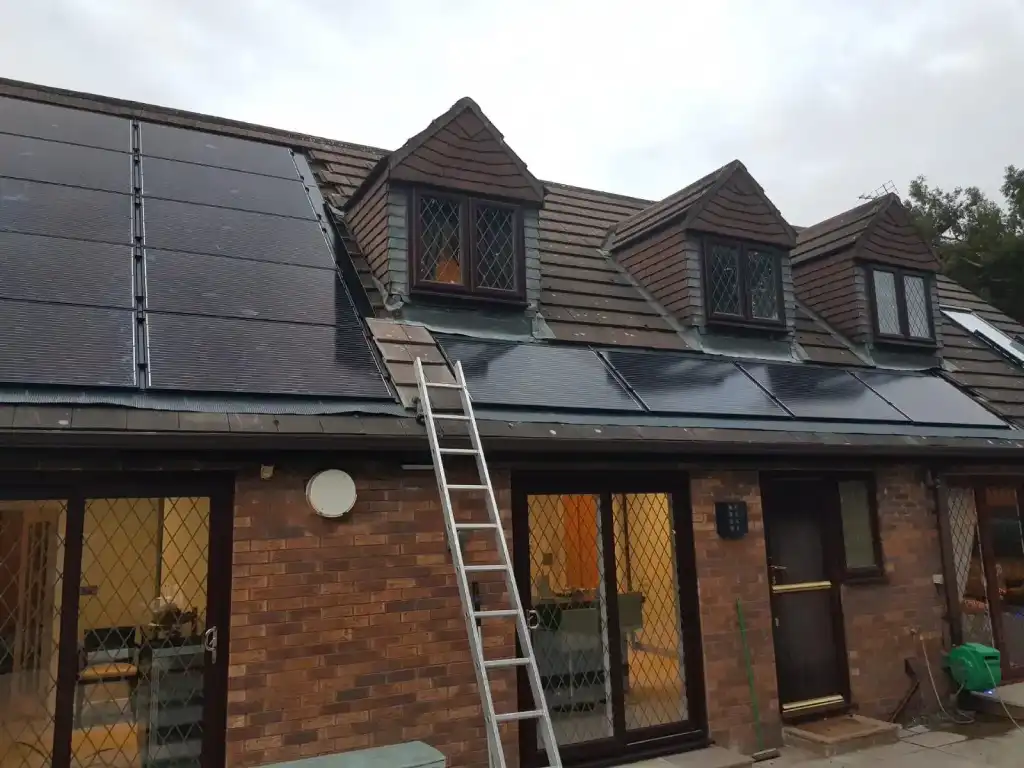
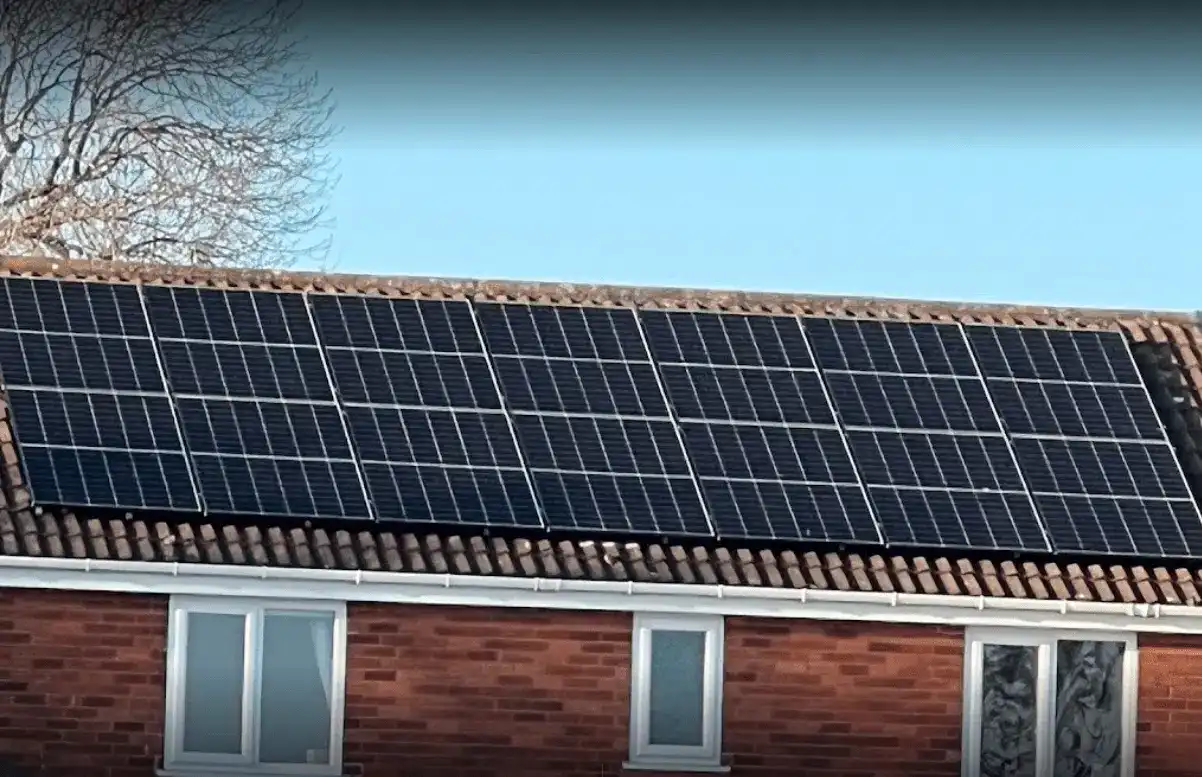
View all our latest projects to get a glimpse of our dedicated work for our valuable customers.
The photovoltaic effect is what’s known as a thermodynamic process. Solar panels directly convert sunlight into electricity and are formed of photovoltaic cells, which are usually made of silicon. When sunlight strikes the cells, the photons from the sunlight are absorbed by the atoms in the silicon material. This absorption excites electrons in the silicon, causing them to move and create an electric current. The electric current is then captured and can be used to power electrical devices or sent to the grid for distribution.
The cost of solar panels can vary significantly depending on factors such as the size of the system and your specific energy requirements. For a more accurate estimate tailored to your needs, we recommend completing our quick remote survey to receive detailed pricing information.
The cost of solar panels depends on your energy usage and roof space. A typical 4kW system, consisting of 10-16 panels, is usually the most cost-effective option for homes. Commercial properties, with higher energy needs and more roof space, generally require more panels. Smaller businesses might need a few dozen panels, while larger operations could need significantly more. To get an accurate, no-obligation quote tailored to your needs, complete our free survey.
UPS Solar panels typically last 25-30 years, retaining at least 80% of their power output. With good quality, favorable conditions, and proper maintenance, their lifespan can be even longer. UPS Solar offers a 25-year manufacturer warranty and a 25-year performance guarantee to protect your investment.
The energy a solar panel system produces depends on its size, panel efficiency, and sunlight exposure. In the UK, a 4kW system typically generates 3,400 to 4,200 kWh annually, enough to cover an average household’s electricity needs. Actual output can vary based on installation conditions and weather. For a precise estimate, request a free quote survey.
South-facing roofs (south-east, south, south-west) are the most efficient for solar panels, but flat roofs and ground-mounted systems are also viable. It’s crucial that the installation area has minimal shading and gets sunlight most of the day. For a detailed assessment of your home’s solar suitability and options, request a free quote survey.
Solar panel batteries are used for storing the electricity from solar panels, which get the energy from the sun directly. Solar panel batteries can be used to give power to your house or your workplace in the form of electricity, when the weather is cloudier, or at night. Some of them can be used as well to charge by charging electric cars, which increases their usefulness and is practical.
Cleaning your solar panels regularly maximises their efficiency by ensuring they absorb the most sunlight. Dust, dirt, and bird droppings can reduce their effectiveness. Panels typically need cleaning once a week. In dry areas, manual cleaning is required, while in rainier regions, natural cleaning is often sufficient.
Battery storage maximises the benefits of commercial solar panels by storing excess energy for use during peak times, at night, or on cloudy days. This boosts energy independence, reduces reliance on the grid, and lowers costs by avoiding peak utility rates. Additionally, battery storage provides backup power during outages, ensuring continuous operations.
Yes, solar panels generate electricity in cloudy weather. They continue generating electricity even when the sun isn’t directly visible.