
Energy has become unpredictable again.
Ongoing conflict in key regions, pressure on global supply chains, and wider economic instability have all fed into rising energy costs and long-term uncertainty. The UK has already seen what happens when gas markets tighten. Prices move quickly, and households and businesses are left exposed.
This is where solar power and the energy crisis has moved from being a green option, or even a luxury, to becoming a practical solution in addressing the growing concerns about energy availability. The focus on solar power and the energy crisis is more relevant than ever in today’s world.
The Current Energy Situation
The UK still relies heavily on imported energy, particularly gas. When global supply is disrupted, prices increase. That cost feeds directly into electricity bills.
UK Gov has published a page on their website explaining the current position and issues with Iran, the Middle East and UK energy
Recent years have shown how fragile that system can be:
-
Wholesale energy prices have spiked due to geopolitical tensions
-
Supply routes can be affected overnight
-
Long-term pricing is difficult to predict
For businesses especially, this creates a planning problem. Energy is no longer a stable overhead.
How Can A New Solar Installation Help Reduce Uncertainty Caused By An International Crisis
Understanding solar power and the energy crisis is crucial for navigating these uncertain times effectively.
Solar power addresses a different part of the problem. It doesn’t rely on imported fuel, and once installed, it produces electricity at a consistent cost.
Energy Security and Independence
As we know by now, Solar allows electricity to be generated on-site. For a home or business, that means less reliance on external suppliers.
At a national level, wider solar adoption reduces dependence on imported gas and oil. That lowers exposure to global price swings and supply disruptions.
Speed of Deployment
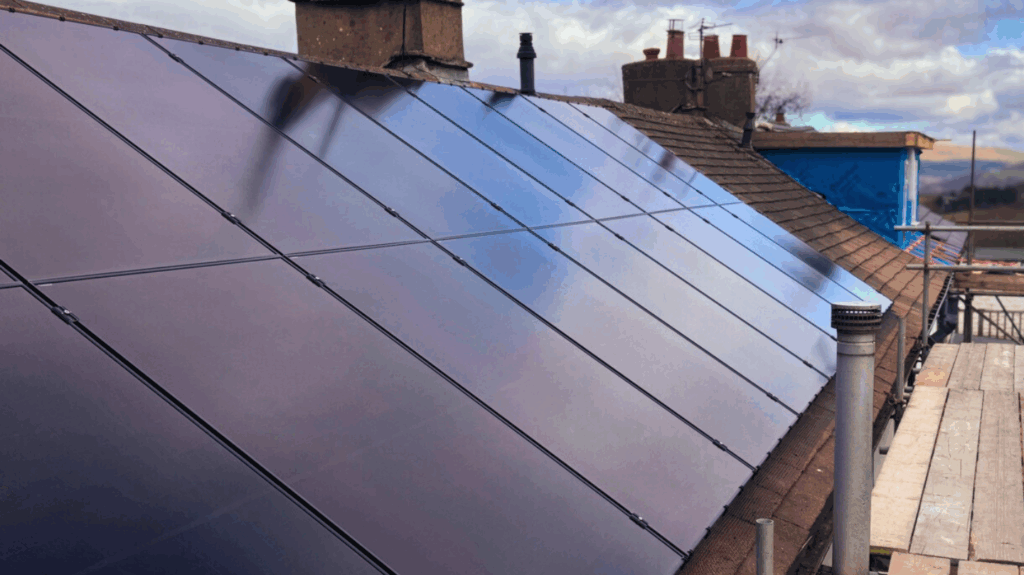
Unlike large-scale power stations, solar systems can be installed quickly.
- Residential systems, once surveyed and confirmed can be fitted in days
- Commercial installations can be completed in weeks
- No long construction timelines or fuel supply agreements
That makes solar one of the fastest ways to increase energy capacity.
Cost and Return on Investment
Electricity generated from solar panels reduces the amount purchased from the grid.
Over time, that translates into:
- Lower energy bills
- Predictable long-term costs
- A clear return on investment
With energy prices remaining volatile, that predictability has real value.
Environmental Impact
Solar PV systems generate electricity without producing greenhouse gas emissions during operation.
There is an environmental cost in manufacturing, particularly in materials like silicon and lithium. However, multiple studies show that solar panels typically offset their production emissions within one to three years of use.
After that, they produce low-impact energy for decades.
Supporting the Grid
In areas with higher solar adoption, excess electricity can be exported back to the grid.
This helps:
- Reduce demand on conventional power stations
- Support grid stability during peak periods
- Create localised energy supply
The Limitations of Solar
Solar is not a complete solution on its own, however, it does tick many of the boxes on the list highlighting the benefits of decentralised energy production.
Intermittency
Solar panels only generate electricity during daylight hours, and output can reduce in poor weather.
This is why battery storage is becoming a key part of modern systems. It allows excess energy generated during the day to be used later.
Infrastructure Requirements
As more properties generate their own electricity, the grid needs to adapt.
Traditional systems were built for one-way energy flow. Solar introduces a two-way model, where energy is both consumed and exported. That requires upgrades over time.
Manufacturing Considerations
Solar panel and battery production requires raw materials and energy. Mining and processing these materials has environmental implications.
However, when measured across the full lifespan of a system, solar remains significantly lower in emissions than fossil fuel-based energy.
A Realistic Position
Solar is not a silver bullet. It doesn’t replace the entire energy system.
What it does is reduce exposure.
- It lowers reliance on imported fuels
- It provides a stable, local source of electricity
- It gives households and businesses more control over their energy costs
In the context of war, economic pressure, and ongoing uncertainty, that control is increasingly important.
The energy crisis isn’t a single event. It’s an ongoing condition shaped by global politics, supply chains, and market forces.
Solar power doesn’t remove those risks entirely, but it does limit their impact considerably.
For many UK homes and businesses, that’s the difference between reacting to energy prices and having some control over them.
If you’re concerned about the emerging energy crisis, environmental issues, or looking for more stable and reliable way to budget for your energy bills, get in touch with our team and we can talk you through the costs and processes, or alternatively, visit the remote survey page and submit your location. It’s free and no obligation and allows us to remotely survey your property and provide a quote based on the positioning and size of your available space.